TV Series
★7(1 votes)
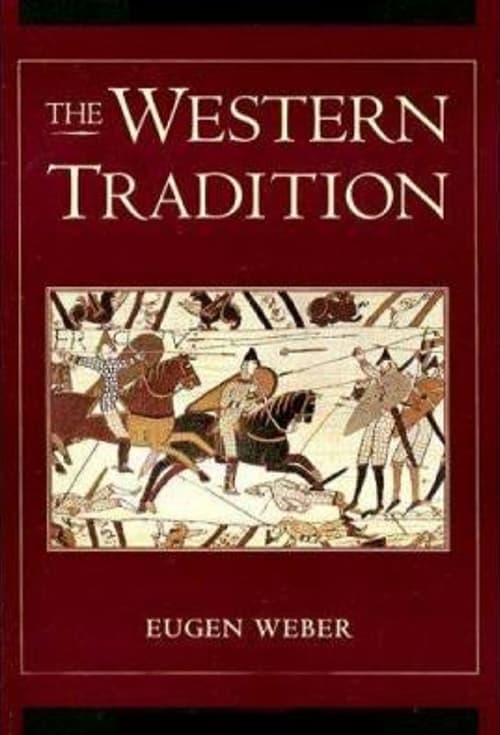
19891 Season52 EpisodesEndedThe Western Tradition
Documentary
Covering the ancient world through the age of technology, this illustrated lecture by Eugen Weber presents a tapestry of political and social events woven with many strands — religion, industry, agriculture, demography, government, economics, and art. A visual feast of over 2,700 images from the Metropolitan Museum of Art portrays key events that shaped the development of Western thought, culture, and tradition.
Episodes & Seasons
Browse episodes by season for this series.
Season 1
52 EpisodesEP 01
EP 1
01.The Dawn of History
30m
1989-01-01
01.The Dawn of History
30m
Aired 1989-01-01
The origins of the human race are traced from anthropoid ancestors to the agricultural revolution.
Watch Episode
EP 02
EP 2
02.The Ancient Egyptians
30m
1989-01-01
02.The Ancient Egyptians
30m
Aired 1989-01-01
Egyptian irrigation created one of the first great civilizations.
Watch Episode
EP 03
EP 3
03.Mesopotamia
30m
1989-01-01
03.Mesopotamia
30m
Aired 1989-01-01
Settlements in the Fertile Crescent gave rise to the great river civilizations of the Middle East.
Watch Episode
EP 04
EP 4
04.From Bronze to Iron
30m
1989-01-01
04.From Bronze to Iron
30m
Aired 1989-01-01
Metals revolutionized tools, as well as societies, in the empires of Assyria, Persia, and Neo-Babylonia.
Watch Episode
EP 05
EP 5
05.The Rise of Greek Civilization
30m
1989-01-01
05.The Rise of Greek Civilization
30m
Aired 1989-01-01
Democracy and philosophy arose from Greek cities at the edge of the civilized world.
Watch Episode
EP 06
EP 6
06.Greek Thought
30m
1989-01-01
06.Greek Thought
30m
Aired 1989-01-01
Socrates, Plato, and Aristotle laid the foundation of Western intellectual thought.
Watch Episode
EP 07
EP 7
07.Alexander the Great
30m
1989-01-01
07.Alexander the Great
30m
Aired 1989-01-01
Alexander's conquests quadrupled the size of the world known to the Greeks.
Watch Episode
EP 08
EP 8
08.The Hellenistic Age
30m
1989-01-01
08.The Hellenistic Age
30m
Aired 1989-01-01
Hellenistic kingdoms extended Greek culture throughout the Mediterranean.
Watch Episode
EP 09
EP 9
09.The Rise of Rome
30m
1989-01-01
09.The Rise of Rome
30m
Aired 1989-01-01
Through its army, Rome built an empire that shaped the West.
Watch Episode
EP 10
EP 10
10.The Roman Empire
30m
1989-01-01
10.The Roman Empire
30m
Aired 1989-01-01
Rome's civil engineering contributed as much to the empire as did its weapons.
Watch Episode
EP 11
EP 11
11.Early Christianity
30m
1989-01-01
11.Early Christianity
30m
Aired 1989-01-01
Christianity spread despite contempt and persecution from Rome.
Watch Episode
EP 12
EP 12
12.The Rise of the Church
30m
1989-01-01
12.The Rise of the Church
30m
Aired 1989-01-01
The old heresy became the Roman empire's official religion under the Emperor Constantine.
Watch Episode
EP 13
EP 13
13.The Decline of Rome
30m
1989-01-01
13.The Decline of Rome
30m
Aired 1989-01-01
While enemies slashed at Rome's borders, civil war and economic collapse destroyed the empire from within.
Watch Episode
EP 14
EP 14
14.The Fall of Rome
30m
1989-01-01
14.The Fall of Rome
30m
Aired 1989-01-01
Despite the success of emperors such as Hadrian and Marcus Aurelius, Rome fell victim to barbarian invasions.
Watch Episode
EP 15
EP 15
15.The Byzantine Empire
30m
1989-01-01
15.The Byzantine Empire
30m
Aired 1989-01-01
From Constantinople, the Byzantine Empire carried on the traditions of Greece and Rome.
Watch Episode
EP 16
EP 16
16.The Fall of Byzantium
30m
1989-01-01
16.The Fall of Byzantium
30m
Aired 1989-01-01
Nearly a thousand years after Rome's fall, Constantinople was conquered by the forces of Islam.
Watch Episode
EP 17
EP 17
17.The Dark Ages
30m
1989-01-01
17.The Dark Ages
30m
Aired 1989-01-01
Barbarian kingdoms took possession of the fragments of the Roman Empire.
Watch Episode
EP 18
EP 18
18.The Age of Charlemagne
30m
1989-01-01
18.The Age of Charlemagne
30m
Aired 1989-01-01
Charlemagne revived hopes for a new empire in Western Europe.
Watch Episode
EP 19
EP 19
19.The Middle Ages
30m
1989-01-01
19.The Middle Ages
30m
Aired 1989-01-01
Amid invasion and civil disorder, a military aristocracy dominated the kingdoms of Europe.
Watch Episode
EP 20
EP 20
20.The Feudal Order
30m
1989-01-01
20.The Feudal Order
30m
Aired 1989-01-01
Bishop, knight, and peasant exemplified some of the social divisions of the year 1000 A.D.
Watch Episode
EP 21
EP 21
21.Common Life in the Middle Ages
30m
1989-01-01
21.Common Life in the Middle Ages
30m
Aired 1989-01-01
Famine, disease, and short life expectancies were the conditions that shaped medieval beliefs.
Watch Episode
EP 22
EP 22
22.Cities and Cathedrals of the Middle Ages
30m
1989-01-01
22.Cities and Cathedrals of the Middle Ages
30m
Aired 1989-01-01
The great churches embodied the material and spiritual ambitions of the age.
Watch Episode
EP 23
EP 23
23.The Late Middle Ages
30m
1989-01-01
23.The Late Middle Ages
30m
Aired 1989-01-01
Two hundred years of war and plague debilitated Europe.
Watch Episode
EP 24
EP 24
24.The National Monarchies
30m
1989-01-01
24.The National Monarchies
30m
Aired 1989-01-01
A new urban middle class emerged, while dynastic marriages established centralized monarchies.
Watch Episode
EP 25
EP 25
25.Renaissance & the Age of Discovery
30m
1989-01-01
25.Renaissance & the Age of Discovery
30m
Aired 1989-01-01
Renaissance humanists made man "the measure of all things." Europe was possessed by a new passion for knowledge.
Watch Episode
EP 26
EP 26
26.Renaissance & the New World
30m
1989-01-01
26.Renaissance & the New World
30m
Aired 1989-01-01
The discovery of America challenged Europe.
Watch Episode
EP 27
EP 27
27.The Reformation
30m
1989-01-01
27.The Reformation
30m
Aired 1989-01-01
Voiced by Martin Luther, Protestantism shattered the unity of the Catholic Church.
Watch Episode
EP 28
EP 28
28.The Rise of the Middle Class
30m
1989-01-01
28.The Rise of the Middle Class
30m
Aired 1989-01-01
As the cities grew, new middle-class mores had an impact on religious life.
Watch Episode
EP 29
EP 29
29.The Wars of Religion
30m
1989-01-01
29.The Wars of Religion
30m
Aired 1989-01-01
For more than a century, the quarrels of Protestants and Catholics tore Europe apart.
Watch Episode
EP 30
EP 30
30.The Rise of the Trading Cities
30m
1989-01-01
30.The Rise of the Trading Cities
30m
Aired 1989-01-01
Amid religious wars, a few cities learned that tolerance increased their prosperity.
Watch Episode
EP 31
EP 31
31.The Age of Absolutism
30m
1989-01-01
31.The Age of Absolutism
30m
Aired 1989-01-01
Exhausted by war and civil strife, many Europeans exchanged earlier liberties and anarchies for greater peace.
Watch Episode
EP 32
EP 32
32.Absolutism and the Social Contract
30m
1989-01-01
32.Absolutism and the Social Contract
30m
Aired 1989-01-01
Arguments about the legitimate source of political power centered on divine right versus natural law.
Watch Episode
EP 33
EP 33
33.The Enlightened Despots
30m
1989-01-01
33.The Enlightened Despots
30m
Aired 1989-01-01
Monarchs considered reforms in order to create more efficient societies, but not at the expense of their own power.
Watch Episode
EP 34
EP 34
34.The Enlightenment
30m
1989-01-01
34.The Enlightenment
30m
Aired 1989-01-01
Intellectual theories about the nature of man and his potential came to the fore.
Watch Episode
EP 35
EP 35
35.The Enlightenment and Society
30m
1989-01-01
35.The Enlightenment and Society
30m
Aired 1989-01-01
Scientists and social reformers battled for universal human rights during a peaceful and prosperous period.
Watch Episode
EP 36
EP 36
36.The Modern Philosophers
30m
1989-01-01
36.The Modern Philosophers
30m
Aired 1989-01-01
Freedom of thought and expression opened new vistas explored by French, English, and American thinkers.
Watch Episode
EP 37
EP 37
37.The American Revolution
30m
1989-01-01
37.The American Revolution
30m
Aired 1989-01-01
The British colonists created a society that tested Enlightenment ideas and resisted restrictions imposed by England.
Watch Episode
EP 38
EP 38
38.The American Republic
30m
1989-01-01
38.The American Republic
30m
Aired 1989-01-01
A new republic, the compromise of radicals and conservatives, was founded on universal freedoms.
Watch Episode
EP 39
EP 39
39.The Death of the Old Regime
30m
1989-01-01
39.The Death of the Old Regime
30m
Aired 1989-01-01
In France the old order collapsed under revolutionaries' attacks and the monarchy's own weakness.
Watch Episode
EP 40
EP 40
40.The French Revolution
30m
1989-01-01
40.The French Revolution
30m
Aired 1989-01-01
Liberty, equality, and fraternity skidded into a reign of Terror.
Watch Episode
EP 41
EP 41
41.The Industrial Revolution
30m
1989-01-01
41.The Industrial Revolution
30m
Aired 1989-01-01
Technology and mass production reduced famine and ushered in higher standards of living.
Watch Episode
EP 42
EP 42
42.The Industrial World
30m
1989-01-01
42.The Industrial World
30m
Aired 1989-01-01
A consumer revolution was fueled by coal, public transportation, and new city services.
Watch Episode
EP 43
EP 43
43.Revolution and Romantics
30m
1989-01-01
43.Revolution and Romantics
30m
Aired 1989-01-01
Leaders in the arts, literature, and political theory argued for social justice and national liberation.
Watch Episode
EP 44
EP 44
44.The Age of the Nation-States
30m
1989-01-01
44.The Age of the Nation-States
30m
Aired 1989-01-01
The great powers cooperated to quell internal revolts, yet competed to acquire colonies.
Watch Episode
EP 45
EP 45
45.A New Public
30m
1989-01-01
45.A New Public
30m
Aired 1989-01-01
Public education and mass communications created a new political life and leisure time.
Watch Episode
EP 46
EP 46
46.Fin de Siècle
30m
1989-01-01
46.Fin de Siècle
30m
Aired 1989-01-01
Everyday life of the working class was transformed by leisure, prompting the birth of an elite avant-garde movement.
Watch Episode
EP 47
EP 47
47.The First World War and the Rise of Fascism
30m
1989-01-01
47.The First World War and the Rise of Fascism
30m
Aired 1989-01-01
Old empires crumbled during World War I to be replaced by right-wing dictatorships in Italy, Spain, and Germany.
Watch Episode
EP 48
EP 48
48.The Second World War
30m
1989-01-01
48.The Second World War
30m
Aired 1989-01-01
World War II was a war of new tactics and strategies. Civilian populations became targets as the Nazi holocaust exterminated millions of people.
Watch Episode
EP 49
EP 49
49.The Cold War
30m
1989-01-01
49.The Cold War
30m
Aired 1989-01-01
The U.S. and Soviet Union dominated Europe and confronted each other in Korea.
Watch Episode
EP 50
EP 50
50.Europe and the Third World
30m
1989-01-01
50.Europe and the Third World
30m
Aired 1989-01-01
Burdened with the legacy of colonial imperialism, the Third World rushed development to catch up with its Western counterparts.
Watch Episode
EP 51
EP 51
51.The Technological Revolution
30m
1989-01-01
51.The Technological Revolution
30m
Aired 1989-01-01
Keeping up with the ever-increasing pace of change became the standard of the day.
Watch Episode
EP 52
EP 52
52.Toward the Future
30m
1989-01-01
52.Toward the Future
30m
Aired 1989-01-01
Modern medicine, atomic energy, computers, and new concepts of time, energy, and matter all have an important effect on life in the 20th century.
Watch Episode